
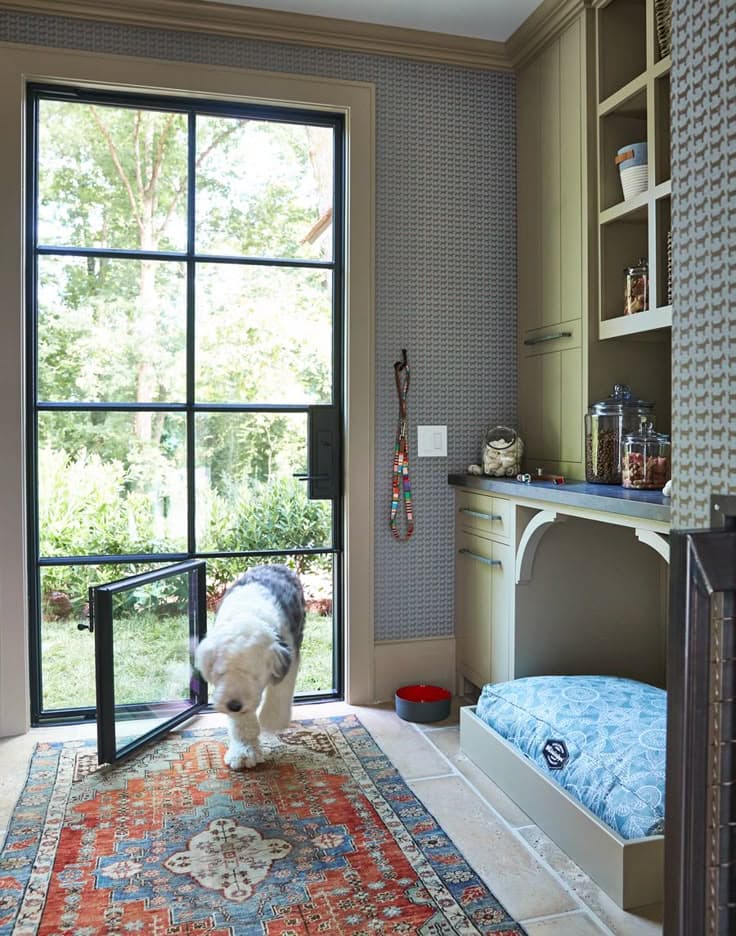
What makes a dog door automatic
An automatic dog door moves its panel under power after recognizing an authorized pet. That is different from an electronic flap that only unlocks and still requires the pet to push through. Both can control access, but they create different daily experiences. A motorized opening may help a pet that dislikes pushing a flap, while an electronically released flap can have fewer powered moving steps. Read the operating description carefully and do not assume the words smart, electric and electronic all mean the same thing.
The useful comparison starts with what happens from approach to secure closure. Identify how the pet is recognized, whether the sensor responds only to a direct approach, how long the opening stays clear, what causes it to close, how it responds to an obstruction and how the panel locks afterward. A long feature list is less valuable than a sequence you can explain and test.
Choose the activation method
Pet-worn transmitters can let the door recognize an authorized animal rather than every animal near the opening. Directional sensing is intended to distinguish a pet approaching the door from one resting or wandering nearby. Confirm the stated activation range, whether the inside and outside ranges can be adjusted separately and whether one device can support every pet that needs access. Also ask what happens if a collar is lost, wet, damaged or has a weak battery.
A microchip-reading or tag-based system may work differently from a directional transmitter. Some products unlock a flap; others move a panel. Do not choose only from the name of the technology. Compare recognition reliability, replacement-device cost, battery routine, multi-pet support and the physical motion the animal must complete. A household with one large dog and one small senior dog may need a different answer than a single young dog.
Plan access in both directions
Four-way access commonly means full entry and exit, entry only, exit only, or closed and locked. Those modes can help manage nighttime routines, yard work, deliveries or a pet that must stay inside temporarily. Verify whether the controls are available on the unit itself. Local controls matter when an app, internet connection or phone is unavailable.
If schedules or remote controls are offered, decide what they genuinely improve. A schedule can create predictable access periods, and activity history can help show when a sensor was triggered. Those conveniences should not replace a physical lock, a safe yard or direct supervision when conditions require it. Confirm how the system behaves if Wi-Fi fails and whether the door continues to recognize the pet locally.
Check panel movement and obstruction response
Watch a complete operating cycle before ordering when a demonstration is available. Note opening speed, sound, the clear time allowed for passage and how the panel reverses or retracts if it meets resistance. Ask whether closing is motor-driven, gravity-assisted or controlled another way. The exact product instructions should explain the safety response and the conditions in which it works.
No powered opening should be treated as permission to ignore fit. The pet still needs enough shoulder and side clearance and a manageable step-over. A dog that twists, crouches deeply or brushes the housing on every trip may hesitate or cause repeated contact. Measure the individual animal and observe mobility, confidence, coat and gait. Train with short supervised sessions and never force the pet through a moving panel.
Power, backup and manual use
Confirm the normal power source, adapter location and cord route before choosing the opening. The route should avoid chewing, water, pinch points, hot surfaces and interference with the host door. A nearby outlet can simplify the project, but the installation still needs to preserve structural, weather and electrical safety. Do not run a permanent cord through an improvised opening or conceal an adapter in a wall unless the product and applicable electrical requirements allow it.
Backup battery support varies. Ask whether backup power is included or optional, how the battery condition is shown, how long the manufacturer expects it to operate under defined use and how it is replaced or charged. Most importantly, understand the secure state during an extended outage. Know how to lock the opening, release it manually or provide another pet route before a storm or travel period.
Fit the installation surface
Door-mounted, wall-mounted and patio-panel systems are not interchangeable. A door model needs enough flat, sound material around the full housing and cutout. A wall model may require a dedicated tunnel, complete finished-wall depth, framing review, utility investigation, exterior flashing and finish work. A patio insert needs verified track height, frame engagement, weather stripping, lock compatibility and screen clearance.
Measure more than the pet passage. Record the clear opening, required cutout, complete outside housing, mounting height and any space needed above or beside the panel for its mechanism. Tape the complete footprint on both sides of the location. Open and close the original door, slider or screen and check handles, trim, locks, rails and nearby furniture. If the opening involves glass, masonry, uncertain structure or concealed utilities, use the appropriate qualified trade before ordering.
Weather and security
A rigid moving panel can behave differently from a flexible flap, but performance still depends on fit, seals, frame alignment, exposure and maintenance. Review how the panel meets its seals, whether perimeter weather stripping is included for the specific installation and how wind-driven rain is managed. No pet opening should be described as universally airtight or weatherproof without regard to installation and conditions.
Security should be evaluated as a complete opening. Confirm the material of the closed panel, the locking method, manual lock controls and whether the host door or patio door retains its normal lock. A pet door does not replace exterior lighting, gates, alarms or other household security. The best system is one whose locked state can be tested and understood without depending on a marketing phrase.
Service and ownership
Automatic doors add sensors, a control board, a power supply, pet devices and moving components to the frame. Before purchase, check the written warranty and the availability of replacement collars or tags, batteries, seals, panels, adapters and other service parts. Ask what troubleshooting can be done locally and what requires removal or shipment. Save the model, serial information, pet-device identity and installation photographs with the order.
Build a simple maintenance routine. Keep sensor areas and panel tracks clean, inspect cords and seals, test local controls and the locked mode, review the backup battery and watch the pet use the opening from both directions. Stop using the automatic function if movement becomes irregular, the panel repeatedly meets the pet or the housing shifts. Diagnose alignment, obstruction, power and service conditions before returning it to normal use.
Before you buy
Write the operating sequence you want in plain language. State which pets may enter and exit, when access changes, how the door should behave without Wi-Fi or household power, how it responds to an obstruction and how you will secure it manually. Add the pet measurements, full product footprint, installation surface, power plan and local service expectations.
Use that record to compare exact models. Confirm every feature on the selected version rather than extending one model's specifications to the entire category. Do not submit an order until price, included components, shipping, compatibility and current availability are verified for the exact configuration.