
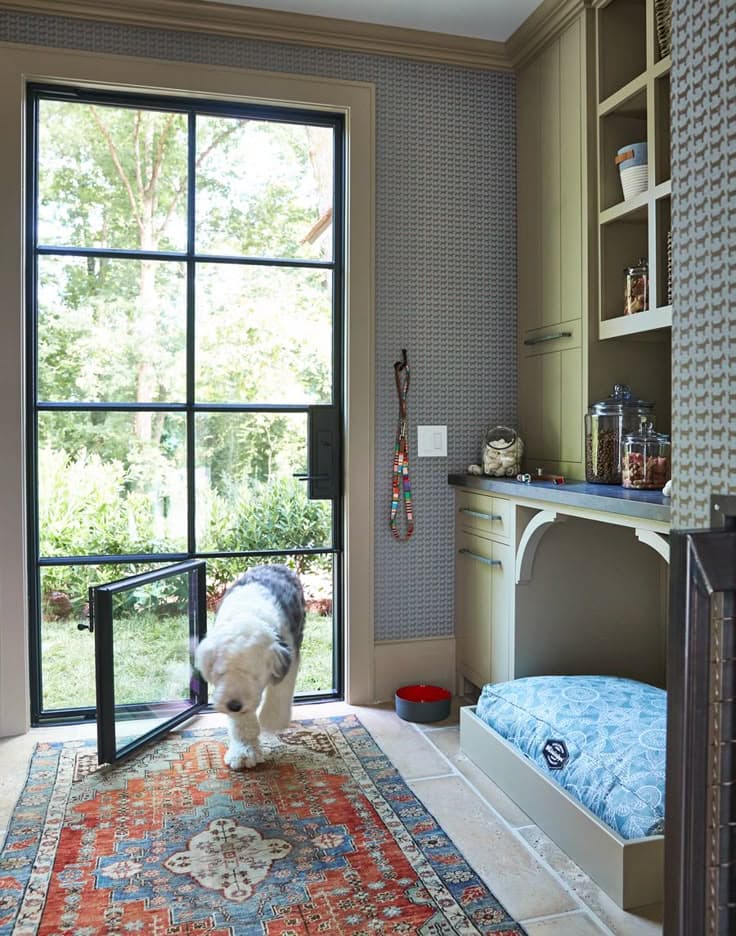
A door-mounted pet door can be a straightforward project when the host door is compatible and every dimension is verified before the first cut. Start by identifying whether the door is wood, metal-skinned, fiberglass, composite, hollow-core or paneled. Check both faces for rails, stiles, raised panels, glass, kick plates, locks and other hardware. The complete outer frame needs a flat mounting area, not only enough space for the rough opening. Hollow-core construction may need internal blocking or a self-framing model designed for that condition. Fire-rated, security and specialty doors should not be altered without approval from the appropriate professional.
Choose the flap opening from the pet first, then use the exact model dimensions to mark the rough opening. Set the lower edge at a comfortable step-over and confirm that the upper edge clears the tallest pet at the shoulders. Tape the full outside-frame outline on both faces. Keep the cutout away from door edges and structural members as required by the door construction and product instructions. Remove the door from its hinges only when that makes the work safer and more controllable, and support it on a stable surface.
Drill pilot holes at the marked corners, use the proper blade for the material and cut carefully without forcing the tool. Metal skins can have sharp edges; composite and fiberglass dust require suitable protection. Dry-fit both frame halves before fastening. The assembly should sit square without twisting the flap opening or bowing the host door. Tighten fasteners evenly rather than crushing the panel. Apply the specified perimeter seal on the exterior face while keeping sealant away from the flap, magnets and serviceable parts.
Rehang and operate the host door before introducing the pet. Confirm hinges, latch, lock and weather seals still work. Cycle each pet-door flap from both directions and verify that magnets meet their strikes. Install and test the security cover. Finally, supervise the pet during short training sessions and inspect the opening again after the first period of regular use.